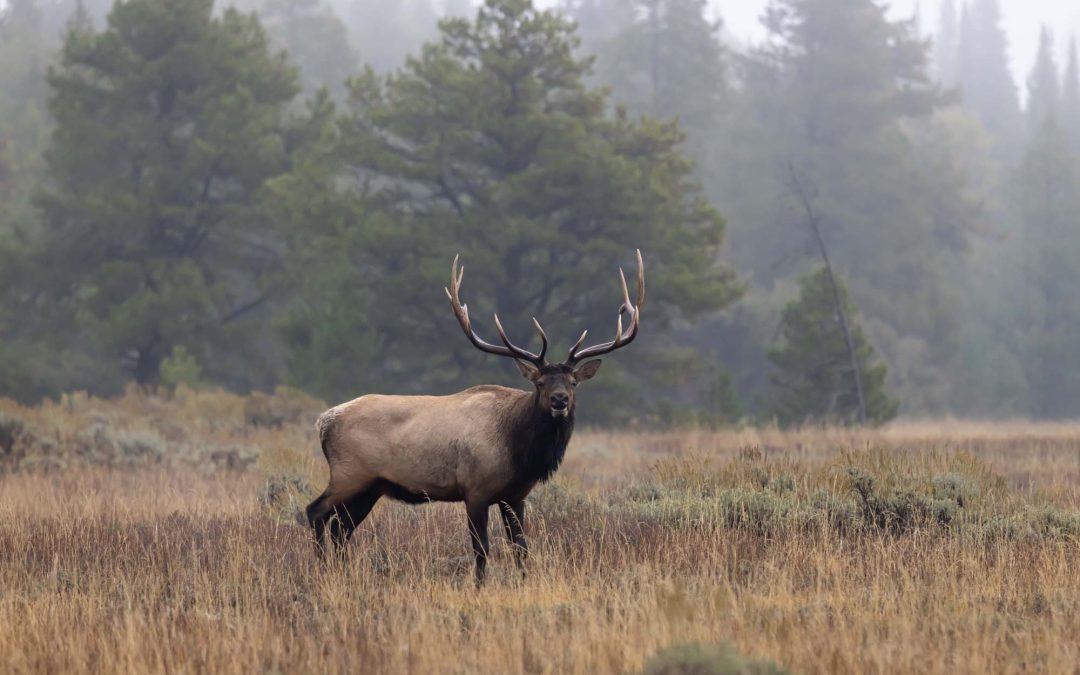
There is nothing quite like the crisp, thin air of a Wyoming morning, the rhythmic sound of hooves hitting a dusty mountain trail, and the echoing, primal scream of a bull elk bugling in the distance. For many hunters, booking a guided Elk Hunt in the rugged backcountry is the pinnacle of their outdoor pursuits. It is an experience that tests your physical limits, challenges your shooting skills, and immerses you entirely in some of the most breathtaking, untouched wilderness left in North America.
If you are researching Wyoming horseback elk hunts, you already know that this isn’t a casual weekend stroll in the woods. It is a true backcountry adventure. At 6 x 6 Outfitters, we specialize in fair chase, public land hunts that utilize experienced mountain horses to get you deep into the prime elk habitat of the Caribou-Targhee National Forest.
But what exactly does a trip like this look like from day to day? And more importantly, how can you ensure you are physically and mentally prepared to make the most of it? In this comprehensive guide, we will walk you through exactly what to expect on one of our guided Wyoming horseback elk hunts and how to set yourself up for absolute success.
Ready to stop dreaming and start planning your ultimate backcountry adventure? Contact Us today to check our availability and customize your 6-day guided elk hunt.
The Allure of Wyoming Horseback Elk Hunts
Wyoming is legendary in the hunting community, and for good reason. The state boasts massive tracts of public land, healthy herds of Rocky Mountain Elk, and landscapes that look like they were pulled straight from a western movie.
When you book a hunt with us, you are signing up for a fair chase experience. We operate under permits in the Caribou-Targhee National Forest, an area known for its unique, diverse landscape. You will find everything from vast, sweeping green meadows to incredibly thick, dark timber. The higher elevations are dotted with steep sidehills and sheer cliffs.
One of the greatest benefits of our specific hunting area is the peace of mind it offers. Unlike many other premier elk units in the Rocky Mountain West, our area is incredibly fortunate to have no resident wolves or grizzly bears. While a solitary predator might occasionally wander through the territory, it is a rare occurrence. This means the elk herds are less pressured by predators, and you can focus entirely on your hunt without constantly looking over your shoulder.
Why Horses and Mules Make All the Difference
You might be wondering, “Do we really need to ride horses every day?” The short answer is: absolutely.
Wyoming horseback elk hunts are defined by the ability to access remote, steep, and demanding terrain that would take foot-hunters half the day just to reach. By the time a hunter on foot gets to the prime glassing knobs, the morning hunt is often over.
Our horses and mules are the unsung heroes of our outfitting business. They are born and raised in the mountains, meaning they are incredibly sure-footed, experienced, and accustomed to the high altitudes and steep grades. Expect to ride anywhere from 30 minutes to 2 hours a day, depending on where the elk are hiding.
Trusting Your Mount in the Dark
Because elk are most active at first light and last light, you will be doing a significant amount of riding in the pitch black. For those who haven’t ridden much, sitting on a horse navigating a rocky, steep trail in the dark can feel intimidating. However, it is vital to trust these animals. They have traveled these specific trails hundreds of times and can see incredibly well in the dark.
If the idea of riding in the dark is truly a dealbreaker for you, communication is key. Let your guide know your comfort levels before or during the trip. We can always adjust our strategy to hunt closer to camp or formulate a plan that has us returning just before nightfall.
A Day in the Life of a Backcountry Elk Hunt
If you want to know what a standard day looks like during our Wyoming horseback elk hunts, you need to be an early riser. Here is a breakdown of what you can expect from dawn until dusk:
1. The Pre-Dawn Wake Up
Your day will start early—often around 4:00 AM. We will get you out of your warm sleeping bag and fuel you up with a large, hot, and hearty breakfast prepared by our camp cooks. We will also pack a robust lunch and plenty of snacks to keep your energy up throughout the long day ahead.
2. The Ride Out
Well before the sun breaks the horizon, we will saddle up the horses and hit the trail. The goal is to reach our desired hunting location and get set up under the cover of darkness. This allows the woods to settle and ensures we are in position when the elk begin their morning routines.
3. Glassing, Glassing, and More Glassing
Once we reach our destination, we tie up the horses and the real work begins. We rely heavily on our optics. You will spend hours sitting on high, windy vantage points looking across canyons and into thick timber. We let our eyes do the walking. When a target bull is finally located, you and your guide will huddle up, factor in the wind, the terrain, and the animal’s direction of travel, and formulate a stalking strategy.
4. The Stalk and the Shot
Not every stalk is successful—that is the reality of fair chase hunting. The wind might shift, or the elk might simply slip into the dark timber. But when it all comes together, you will need to be ready to execute a clean, ethical shot.
5. Returning to Camp
After a long day of hiking, glassing, and stalking, we will hike back to the horses and ride back to camp. You will usually arrive well after dark, tired but fulfilled, where a massive, hot dinner will be waiting for you.
How to Prepare Physically and Mentally
The most common misconception about guided hunts is that the guide does all the work, and the hunter simply shows up to pull the trigger. In reality, the success of your Wyoming horseback elk hunts depends heavily on your personal abilities and preparation.
Physical Preparation: Conquering the Elevation
We will be hunting at elevations ranging from 7,000 feet to 9,500 feet. The air is noticeably thinner here, and the terrain is incredibly steep and demanding. You do not need to be an Olympic marathon runner, but arriving out of shape will severely limit your opportunities and your enjoyment of the trip.
- Cardio is King: Months before your hunt, start a rigorous cardiovascular routine.
- Hike with Weight: The best way to train for mountain hunting is to hike mountains. Load a backpack with 30-40 pounds of gear and hit the steepest local trails you can find.
- Stair Climbers: If you live in a flat area, the stair-stepping machine at your local gym will become your best friend.
Mental Preparation: Patience and Perseverance
Elk hunting is a mental game. You might glass for three days straight and see nothing but cows and smaller satellite bulls. You might bust a stalk because the wind swirls at the last second. You must pack your patience and maintain a positive attitude. Trust your guide, trust the process, and stay focused.
Choosing the Right Gear: Rifles and Optics
When you are investing in a 6-day guided trip, bringing the right equipment is paramount.
What Caliber Rifle is Best?
We do not enforce a strict, specific caliber requirement. The golden rule of elk hunting is this: Bring the rifle you shoot best. A well-placed shot from a .270 Winchester is infinitely better than a poorly placed shot from a .300 Remington Ultra Magnum that you are afraid to shoot because of the recoil. Bring what is comfortable and familiar to you.
Expected Shooting Distances
You should be prepared for a variety of scenarios. Shots in our area can vary from 100 yards in the timber to 450 yards across a canyon. It is crucial that you practice shooting out to 500 yards prior to your arrival. If you are not comfortable shooting at longer ranges, let your guide know immediately so they can work to get you within a distance you are confident in. (If you prefer, arrangements can be made to use one of our guide’s custom long-range rifles, but please discuss this with us well in advance).
The Importance of High-Quality Optics
Because we spend so much of our day glassing, high-quality optics are non-negotiable. Bring the absolute best binoculars and spotting scope you can afford and are willing to carry in your pack. Good glass reduces eye strain, helps pick apart shadows in the timber, and saves you miles of unnecessary hiking.
What Happens After the Harvest?
The moment your bull hits the ground, the celebration begins—and so does the heavy lifting.
Your guide is fully responsible for field dressing the animal and handling the trophy care (caping it out for your taxidermist). You are more than welcome to roll up your sleeves and help with this process to learn and experience it firsthand, but it is not required.
Once the animal is quartered, we will load the meat, antlers, and cape onto the pack mules and transport everything safely out of the backcountry and down to our base camp.
From base camp, it is your responsibility as the hunter to transport the meat to a processor and the cape/antlers to a taxidermist. Fortunately, we have excellent relationships with several highly recommended local butchers and taxidermists in the area, and we will happily point you in the right direction. Please note that all processing and taxidermy fees are the responsibility of the hunter.
Expand Your Wyoming Hunting Experience
While our Wyoming horseback elk hunts are the crown jewel for many of our clients, 6 x 6 Outfitters offers a variety of world-class guided trips to fulfill your hunting bucket list. If you are looking to diversify your hunting portfolio, we also highly recommend checking out our other packages:
- Spot and stalk the high country on a Mule Deer Hunt.
- Experience the thrill of a spring or fall Black Bear Hunt.
- Test your limits on a once-in-a-lifetime Mountain Goat Hunt.
- Pursue the massive giants of the marsh on a Moose Hunt.
We can even accommodate non-hunting partners for a daily rate of $250, allowing them to ride along and experience the majesty of the Wyoming backcountry right alongside you.
Book Your Backcountry Adventure Today
A guided horseback elk hunt in the high country of Wyoming is more than just a vacation; it is a profound, life-altering adventure that will test your mettle and leave you with memories (and hopefully a freezer full of organic meat) that will last a lifetime.
By preparing physically, practicing with your weapon, and knowing exactly what to expect from the daily routine and the horses, you will arrive at camp ready to tackle whatever the Caribou-Targhee National Forest throws your way.
Our family-run operation prides itself on 15 years of outfitting experience, meticulous planning, and a deep-rooted passion for horsemanship and fair chase hunting. Our 6-day packages include your guide, lodging, home-cooked meals, horses, tack, and full field trophy care.
Spots for our premium Wyoming horseback elk hunts fill up incredibly fast. Don’t let another season pass you by. Contact Us today at 6x6outfitters@gmail.com or call (307) 368-0869 to discuss your expectations, ask any remaining questions, and secure your spot in camp.